
Before Booking your Plane Tickets, Read up on the Thailand Visa Process
Nowadays, there are two pre-requisites to traveling around the world: a passport and a visa. So even before you book your plane tickets to Thailand, it’s essential to know the immigration rules and visa options. Recently, the Thai government updated the Thailand Tourist Visa measures and also introduced a brand new Thailand Destination Visa.
Our Favorite Travel Resources for Exploring Asia
- The Best Deals on Hotels in Thailand: Agoda.com
- Most Family-friendly Airline: Qatar Airlines
- Renting a Car: EconomyBookings.com
- Getting around (ferry, train, flights, bus, transfers): 12go.com
- Booking an Activity or Tour in Asia: Klook.com
- Travel Insurance: VisitorsCoverage.com
- Internet and Cell Phone Service: Airalo
Thailand Tourist Visa
There are a few different types of the Thailand Tourist Visa and a few different ways to acquire such visa. This can make it a little confusing to know which one to get and which way to get it.
For most people reading this blog, you probably fall under the Thailand Tourist Visa Exemption Scheme or the Visa on Arrival.
THAILAND TOURIST VISA EXEMPTION SCHEME:
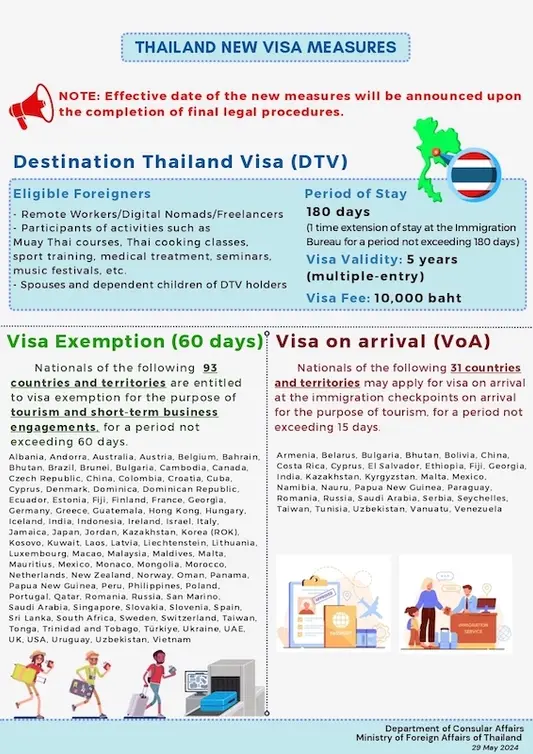
- People from 93 countries will be able to enter on the Thailand Tourist Visa Exemption Scheme without needing to apply for a tourist visa in advance of arriving. This recently increased from 57 countries to 93 countries. Yayy!
- Under this scheme, most countries are allowed to stay in Thailand for up to 60 days. In the past, this was only a 30 day period of stay. Whoop whoop!
- If you would like to stay more than 60 days, you can apply for an additional 30 day extension. The Thailand Tourist Visa extension fee is 1900 THB (about $55 USD).
- Nationals who qualify for the Thailand Tourist Visa Exemption Scheme include:
- USA, Canada, Australia, New Zealand, the UK, most European countries, South Africa, South Korea, China, Hong Kong, Singapore, Vietnam, Japan, and others.
THAILAND TOURIST VISA ON ARRIVAL (VOA):
- Thailand has also increased the number of countries under the Thailand Tourist Visa on Arrival from 19 to 31 countries.
- Those who qualify for the Thailand Tourist Visa on Arrival include: Venezuela, Tunisia, Bolivia, Serbia, and others.
- A Thailand Tourist Visa on Arrival grants a period of stay for 15 days without having to apply for a tourist visa in advance.
- The Visa on Arrival is 2000 THB (about $60 USD).
How to Apply Thailand Visa (e-Visa)
In the past, anyone wanting to visit Thailand had to apply for a tourist visa at a local Thai embassy (outside of Thailand). But over the past couple of years, Thailand has been working hard to streamline this process. They have made it much easier to get a Thailand Tourist Visa. One of those ways is through the Thailand e-Visa online platform.
- Nationals from the USA, Canada, the UK, and most European nations (around 64 countries) can apply directly online for a Thailand Tourist Visa (e-Visa).
- You can apply for a single entry tourist visa or a multiple entry tourist visa.
- Do note that you must be in a specific country (such as the USA or in Europe) when applying. You can not apply for this if you are already in Thailand.
Check out this Bangkok Hotel Guide with the most kid-friendly places to stay for your upcoming family vacation to Thailand!
Thailand Tourist Visa (e-Visa) Single Entry
- A single entry visa means you can enter Thailand just one time.
- You must use this visa within 90 days of receiving the visa approval. So don’t apply for this visa if you aren’t traveling to Thailand within the next 90 days.
- This visa allows a period of stay in the country for up to 60 days.
- If you would like to stay up to 90 days, you could apply for one extension of stay for an additional 30 days.
- With the updated Thailand Tourist Visa Exemption Scheme, most people do not even need to apply for this single entry Thailand Tourist Visa (e-Visa) anymore.
Thailand's Tourist Visa (e-Visa) Multiple Entry
- However, I do recommend applying for the multiple-entry Thailand Tourist Visa (e-Visa) if:
- you would like be in Thailand for a period of 2-6 months
- you would like to enter and exit Thailand more than 2 times during your stay.
- This multiple entry Thailand Tourist Visa allows you to enter and exit Thailand as many times as needed for up to 6 months.
- However, please remember that your maximum length of stay in the country is 60 days. Plus a 30 day extension request at the immigration office.
- Essentially, this visa grants you the ability to stay in Thailand as a tourist for a total of 180 days with two extension requests at the immigration office and one exit from the country at a maximum of 90 days.
You can get the most up-to-date information from the official Thailand e-Visa website: https://www.thaievisa.go.th/
Destination Thailand Visa aka DTV
The Destination Thailand Visa (DTV) is a new visa measure that went into effect as of July 1, 2024. This Thailand visa is being termed as the new Thailand Digital Nomad Visa. This is mainly because it seems to be a perfect fit for people wanting to work remotely in Thailand for up to 5 years.
The number of digital nomads seeking to live and work in Thailand is ever increasing due to Thailand’s relatively affordable cost of living, the modern infrastructure, and the high speed connectivity.
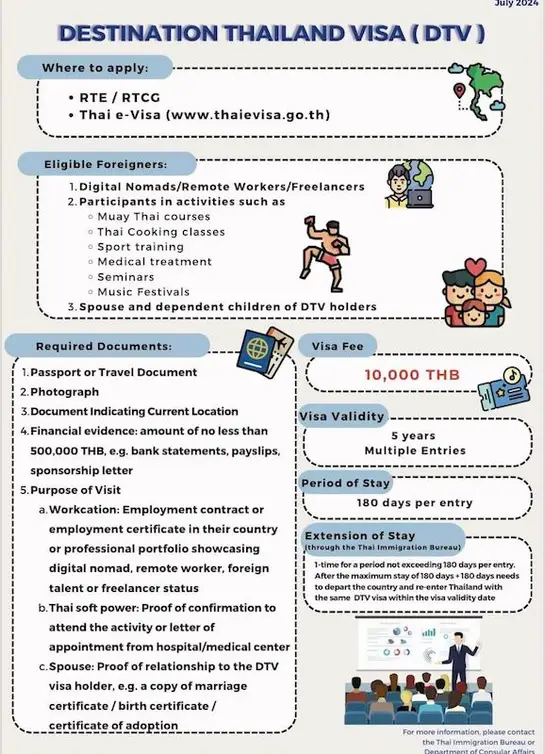
WHO IS THE DESTINATION THAILAND VISA (DTV) FOR:
- Those wanting to Work and Travel in Thailand
- Digital Nomads and Remote Workers
- Self-employed Freelancers
- Social Media Influencers
- Anyone who will join ‘Thai Soft Power’ activities such as Muay Thai classes, Thai cooking classes, undergo medical treatment, join artistic festivals, attend music festivals, or would like to take part in short-term educational courses or seminars
- 5 Year Validity with multiple-entry status
- Can stay in Thailand for up to 180 days
- At the 180 day mark, you can apply for an extension for another 180 day stay.
- Then, you would need to leave Thailand and go to another country.
- Afterwards, you could re-enter Thailand to use the DTV visa for another 180 days. And repeat the above process.
- Minimum Age: 20 years old
- Can apply for dependents such as your spouse or children
*Our good friends, who work remotely for a US organization as a social media coordinator, applied for this visa in September 2024. She got approved, then got her husband, also a digital nomad, and their child approved within another few weeks.
VISA FEE: 10,000 THB (about $285 USD)
WHAT’S NEEDED TO APPLY FOR THE DESTINATION THAILAND VISA:
- Passport and Passport Photos
- Document showing current location
- Proof could be a driver’s license, rental agreement, or bank statement
- A bank statement with no less than 500,000 THB (about $14,300 USD) to guarantee that you can support yourself during your extended stay
- Proof of Purpose of Visit
- Example: to work remotely, you’d need an employment contract from abroad, an employment certificate from your country, or a professional portfolio showing your freelance work
- Example: to receive medical treatment, you’d need an appointment letter from the hospital
- Example: to attend the soft power activities, you’d need proof confirming you will attend that event or seminar
- If you will also apply for your spouse or dependents (under age 20), then you would need a marriage certificate and birth certificates as well.
Note: Please do not take this blog as legal advice or even as fully accurate. These are just my own opinions trying to offer helpful explanations. You can read my full disclosure here.
WHERE TO APPLY FOR THE DESTINATION THAILAND VISA (DTV):
- Royal Thai Embassy or Royal Thai Consulate
- Thailand e-Visa online platform
Other Thailand Visa Options
There are many other Thailand Visa options such as:
- Retirement Visa is a 1 year visa for those over 50 and have a minimum monthly pension amount or a minimum of 800,000 THB (about $23,000 USD) in a Thai bank account.
- Student Visa for those seeking to study within Thailand whether that is at a cooking school, Thai Language School, a university, or in a Master’s Program.
- The Elite Visa is geared towards people wanting to be a tourist in the country for a long-term period of 5-20 years. It comes with some helpful perks, but the price tag is quite steep at 900,000 THB (about $27,000 USD) for the 5 year visa.
- Long-term Resident Visa is geared toward professionals wanting to live and work in Thailand for long-term. It can offer an uninterrupted time period of 10 years as well as some tax exemptions on foreign earned income. However, this visa has a long list of requirements to be able to apply. So, feel free to reach out if you’d like more details.
There are many other Thailand Visa options available such as if you marry a Thai person or if you have been hired by a Thai company or school to work in the country.
Still Have Questions about the Thailand Visa Process?
Hey there, we're Brittany and Witt!
Awesome Bangkok Family Hotel Options
Where to Stay in Bangkok for families?
LUXURY STAY IN BANGKOK:
If you’re not on a specific budget, I’d highly recommend staying at the Shangri-La Bangkok Hotel, which was voted the most kid-friendly hotel in Bangkok.
MID-RANGE HOTEL IN BANGKOK:
If you’re like our family, you want a great stay at a reasonable price. Thus, I’d highly recommend staying at the Novotel Living Bangkok Sukhumvit because up to 2 kids aged 16 and under can stay free.
BANGKOK BUDGET-FRIENDLY FAMILY HOTEL:
We also really love the Jasmine Grand Residence because it has our favorite swimming pool in all of Bangkok along with 1-3 bedroom suites for just $75-$150 USD. Such a steal!
FAMILY-FRIENDLY AIRBNB HOMES:
One of the most charming vacation homes in Bangkok was this AirBNB Home near the main Sukhumvit Road. With a play room full of toys, 2 lounge spaces with Smart TVs for movie nights, and a soaking tub for mom, this is a perfect place to stay in Bangkok for families.
HOTEL TIP: Here are 10 must know tips before booking your stay in Bangkok.
Best Family-friendly Airline to Come to Thailand
FLIGHT TIP: We’ve personally had the best experience flying to Thailand with our family on Qatar Airlines and also Japan Airlines. Both were child-friendly airline options.
- Families with small children could board early
- Automatically got bulk-head seating when we traveled with an infant
- Could pre-select kid-friendly meals
- They have great entertainment options for the littles
- They had ‘grab-n-go’ snacks available throughout the whole flight
- The best part : more legroom than the other international flights for families that we’ve taken
Thailand has a tropical climate, which means it is mostly hot and humid year round.
Temps range from about 75’F (22’C) to 100’F (40’C), but mostly stay in the high 80s (low 30’Cs).
Thailand generally has two seasons: wet and dry.
The Wet Season
- heavily influenced by the monsoon winds
- typically lands between June to September
- Doesn’t typically rain all day
- Short bursts of heavy rainfall
INSIDER TIPS FOR TRAVELING THAILAND DURING RAINY SEASON:
- Pack shoes that can get wet, quick drying clothes, and a poncho or umbrella.
- Wear mosquito spray at dusk because of the small risk of Dengue Fever and other mosquito-borne illnesses.
The Dry Season
- generally between November to April
- Has mostly clear, sunny days
- Can be quite hot
- This is also ‘Burning Season’ for local farmers, and the air pollution can be quite high in Bangkok, Chiang Mai, and other farming towns.
*Do note that May and October are shoulder months. The days could be either dry or wet. It just depends if the monsoon season comes early that year or late.
That being said, the very best time to visit Thailand with kids is between December to February. But our family lives here year-round and love every season!
Internet is a must when visiting Thailand
You’ll need to stay connected while traveling in Thailand — for GPS Maps, researching the best island hopping tour packages, or letting the kids have some downtime watching Bluey on YouTube.
Don’t do the T-Mobile or AT&T International Roaming plans for about $10 per day — save that money for a nice restaurant or fun activity!
E-SIM: I highly recommend getting an eSIM from Airalo to have great internet service all over Thailand. They are actually using the same local providers that AT&T, T-mobile and Verizon will use.
I have personally used Airalo many times traveling all over the world, and it works great and is SUPER easy to install.
To use your Airalo eSIM, you simply buy a package then scan the QR code from your email to install and activate the eSIM.
The packages run from only $4.50 for 1 GB of data to $35 USD for Unlimited Data in Thailand.
TIPS FOR TRAVELING THAILAND WITH KIDS: If you let your kids watch YouTube, Netflix, etc, then I recommend getting the Unlimited Data. But if you’re not video streaming, then 50 GB of data is enough to browse the internet, use Google Maps, and stay in touch with friends back home.
PHYSICAL SIM CARD: You could also pick up a physical SIM card at the airport upon arrival, at any mall, which would have a TRUE shop, DTAC shop, and/or AIS shop, or even some 7-Elevens have them. Just ask! You would need your passport on hand. The physical SIM + a prepaid service card would cost about 999 baht (~$30 USD), but it usually comes with 30GB of Data. So Airalo is a much better deal.
TIP #2: If you plan to use a physical SIM card, then be sure to contact your local phone provider (such as AT&T or Verizon) before traveling overseas to check that your phone is already unlocked. They can usually do this for you over the phone.
Other Blogs that might be helpful for a trip to Bangkok:
Other Blog Posts:
Best Thailand Family Hotels from Bangkok, Chiang Mai, Phuket, Krabi, Koh Lipe, Koh Chang, Kanchanaburi, Pattaya and more!
3 Week Thailand Itinerary – Exploring the top 4 best places to visit in Thailand including Bangkok, Chiang Mai, Krabi, and Koh Lipe (dubbed the Maldives of Thailand)
2 Week Thailand Itinerary – Island Hopping to the Best Beaches in Thailand
Best Time to Visit Thailand + 9 Essential Tips before Booking your Flights!
The Best Things to Do in Bangkok with Kids from the most kid-friendly attractions, cultural activities, museums, family-friendly restaurants, indoor playgrounds, and what to do on a rainy day in Bangkok with kids.
Disclaimer: All recommendations in this post are my own opinions. But as an Amazon Associate and Travel Payouts member, I get a small commission from qualifying purchases. This helps us keep sharing helpful travel content. Thank you for your support!
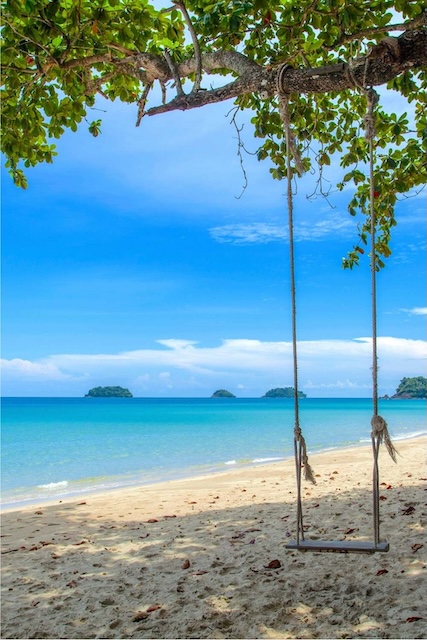
10 Day Thailand Itinerary for Families visiting some of the Most Beautiful Destinations in Thailand but away from the Touristy Crowds
Looking to explore Thailand with your family — away from the crowds? This 10 Day Thailand Itinerary for Families includes hidden gems only us locals know about! Including kid-friendly Bangkok attractions, a mountain escape with a fun train ride and waterfalls, and that tropical island getaway you’ve been dreaming of!
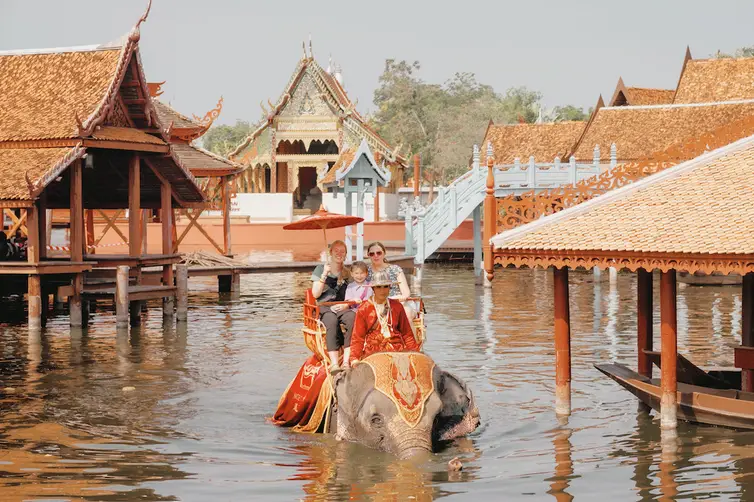
Best Things to Do in Bangkok with Kids : 50+ Fun Family Adventures
Looking for the best things to do in Bangkok with kids? We’re a local family of 6 who want to share the fun family attractions and off-the-beaten path activities that we’ve found while living here in Bangkok. Enjoy!